
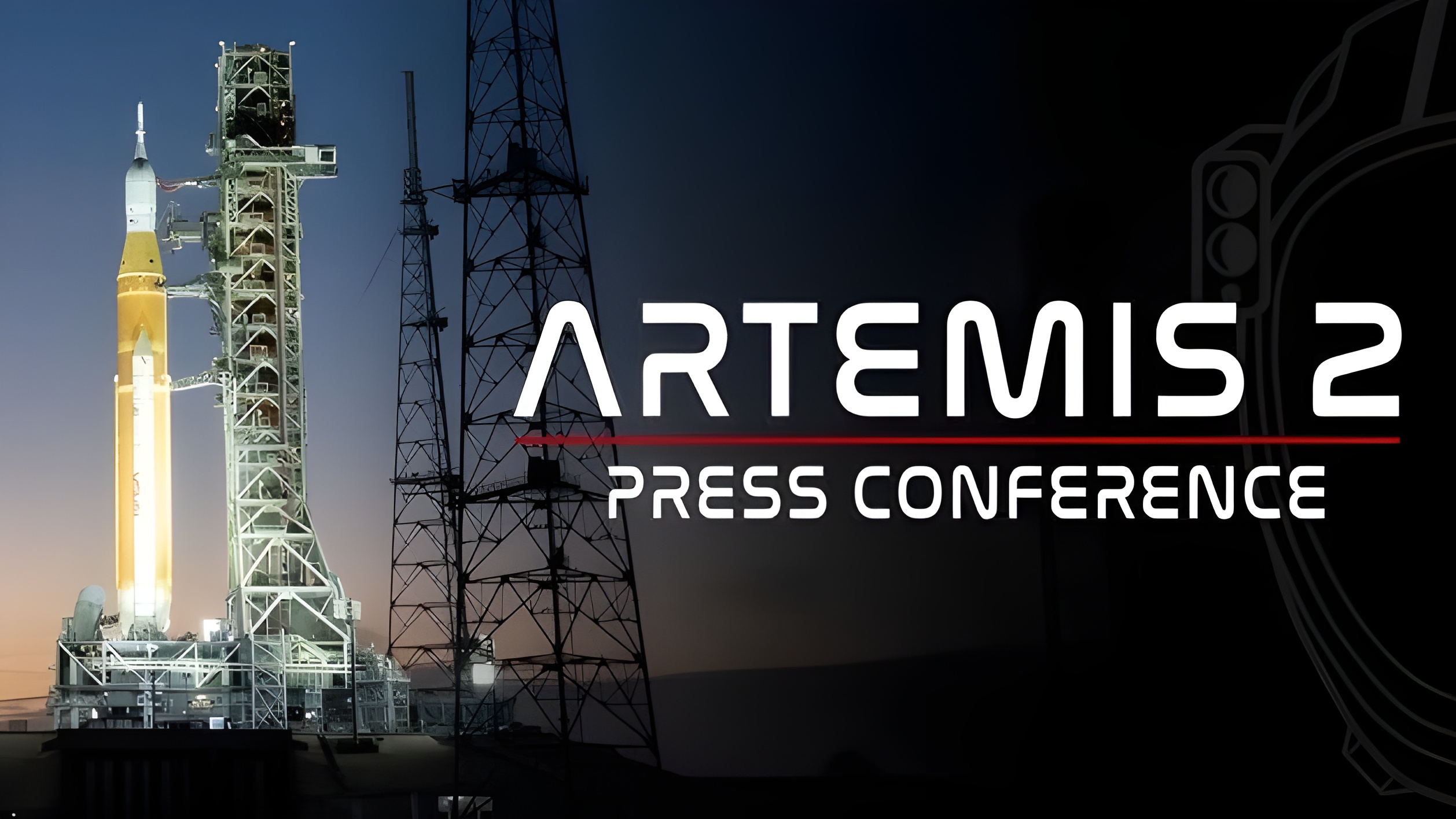
Artemis 2 Mission Presser (Day 10)
Artemis 2 Mission Presser (Day 10) Rating U — UNIVERSAL (ALL AGES): NASA’s Artemis II Post?Splashdown Briefing: A New Benchmark in Deep?Space Operations - In a tightly scripted yet emotionally charged post?splashdown briefing on April 11, 2026, NASA framed the safe return of the Artemis II crew as a pivot point between proof-of-concept and sustained deep?space operations. The event, streamed from Johnson Space Center, came one day after NASA astronauts Reid Wiseman, Victor Glover, and Christina Koch, along with Canadian Space Agency astronaut Jeremy Hansen, touched down in the Pacific Ocean, concluding a 10?day circumlunar mission that surpassed the Apollo 13?era record for farthest crewed flight distance and produced the first human?crewed visual survey of the Moon’s far side. Agency leaders and program managers used the podium to highlight not only mission success but also a growing operational template for Artemis III and beyond. The Odyssey?class Artemis II flight validated core subsystems—Orion’s life support, guidance, and thermal-protection shields—under full-up lunar-distance stress, while the proximity operations with the Interim Cryogenic Propulsion Stage (ICPS) confirmed the choreography required for cis-lunar logistics and future gateway-centric architectures. NASA’s Exploration Systems Development and Orion teams reported only minor anomalies, including a monitored helium-line leak and a transient communications dropout, both handled within flight-rule envelopes. Beyond the technical recap, the briefing functioned as a geopolitical and narrative showcase. Senior officials underscored the growing international footprint of Artemis, noting the CSA’s role and the 62-nation Artemis Accords coalition, effectively contrasting Washington’s multilateral framework against Beijing’s rival ILRS venture. The crew’s own reflections—especially on radiation environment, in-cabin acoustics, and the “overview effect” of distant Earth and Moon—emerged as a subtle counterweight to the technical jargon, emphasizing human resilience as an operational variable in its own right. For Washington, Artemis II now becomes both a data repository and a political calling card. NASA’s public-affairs apparatus has successfully recast the mission as a foundational step toward Artemis III’s 2027 lunar landing, but the underlying challenge remains: converting orbital success into repeatable, affordable surface operations without over-extending U.S. capabilities or alienating allies. The post-splashdown press conference, then, is less a closing book than a carefully calibrated prelude to a far more contested chapter in the new lunar race. International equivalents: MPAA: G | BBFC: U | CSA: Tous publics | FSK: 0 | CBFC: U | OFLC: G | CRTC: C | NICAM: AL No content that could disturb, frighten or harm children of any age. No violence beyond slapstick, no crude humour, no romantic content, no supernatural threat, no scary imagery, and no language beyond mild colloquial terms. Fully appropriate for unsupervised viewing by all ages, including infants. Content Warnings Required: None.
- English (Canada)
Upcomming

Add Review
You have to Sign In to share the review