
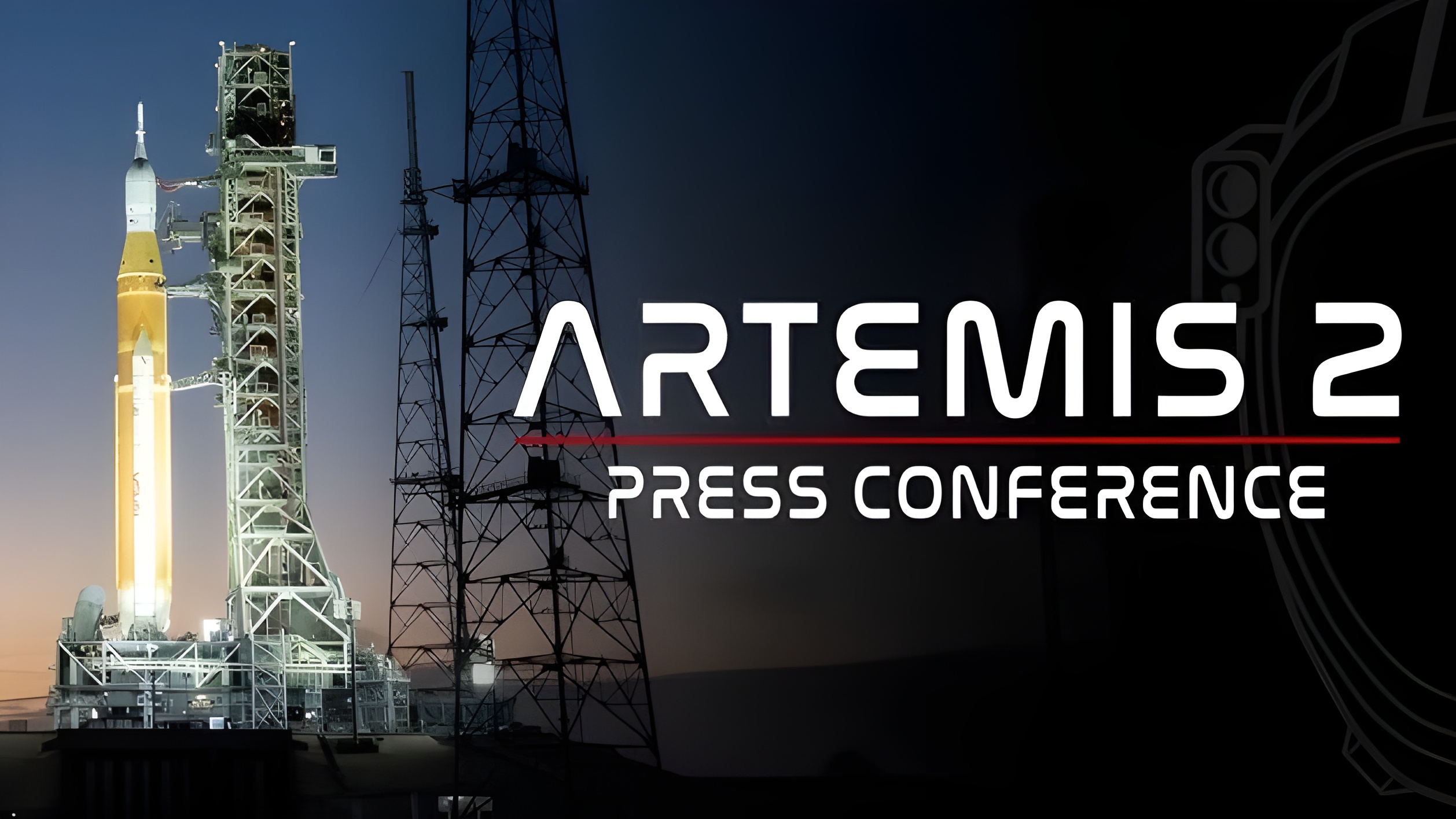
Artemis 2 Mission Presser (Day 9)
Artemis 2 Mission Presser (Day 9) Rating U — UNIVERSAL (ALL AGES): NASA’s Artemis II Daily Briefing (April 9, 2026): A Controlled Descent into Mission Legacy: On April 9, 2026, NASA’s live-streamed Artemis II daily news conference distilled Artemis II not as a single climactic moment but as a closing engineering and narrative arc. With the Orion crew now less than 48 hours from their scheduled Pacific splashdown on April 10, program leaders at Johnson Space Center emphasized execution discipline, risk-minimization, and the quiet accumulation of operational insight that would define the mission’s long-term value far more than its headline records. Associate Administrator Amit Kshatriya, Artemis II lead flight director Jeff Radigan, and Orion vehicle manager Branelle Rodriguez presented a tightly choreographed update. Rodriguez walked reporters through final system checks: Orion’s thermal protection, guidance and navigation, and life-support loops remained in green, with the team tracking only minor telemetry anomalies already accounted for in the mission’s contingency playbook. Radigan, speaking from the controller’s console, laid out the final timeline: separation between the crew module and service module, targeted re-entry window, communications blackout, and parachute deployment—all of which framed the coming hours as a precision-driven, not improvisational, phase of the mission. What distinguished the April 9 briefing was its emphasis on routine rather than drama. While the mission’s public milestones—manual piloting of Orion, surpassing Apollo 13 for distance, and the lunar flyby of the far side—had already been cemented in NASA’s visual and institutional memory, the April 9 briefing positioned Artemis II as a test-bed for the “unseen”: radiation exposure, long-duration crew-health metrics, and software-driven anomaly response. In this framing, the Artemis II crew functioned as both test pilots and quasi-laboratory subjects, their ten-day orbit serving as a distributed data factory feeding Artemis III’s design and policy decisions. For the press corps, the briefing offered a subtle reminder that the most consequential phase of Artemis II was not the launch or the lunar flyby, but the controlled return—a reminder that the true test of deep?space exploration lies not in departure, but in safe and repeatable homecoming. International equivalents: MPAA: G | BBFC: U | CSA: Tous publics | FSK: 0 | CBFC: U | OFLC: G | CRTC: C | NICAM: AL No content that could disturb, frighten or harm children of any age. No violence beyond slapstick, no crude humour, no romantic content, no supernatural threat, no scary imagery, and no language beyond mild colloquial terms. Fully appropriate for unsupervised viewing by all ages, including infants. Content Warnings Required: None.
Upcomming


Add Review
You have to Sign In to share the review