
Pixxel: Mapping Earth Invisible Spectrum with Hyperspectral Satellites
Pixxel, an Indian company pioneering hyperspectral imaging from space, has successfully launched three satellites from its Firefly constellation aboard a SpaceX Falcon 9. The company captures hyperspectral data, breaking it into hundreds of narrow light bands, unlocking detail invisible to the naked eye. This enables unprecedented analysis of soil quality, crop stress, water pollution, gas leaks, and even mineral composition from orbit. Pixxel’s platform, Aurora, turns raw data into ready-to-use insights using AI and machine learning. The company has raised nearly $95 million from investors including Lightspeed, Radical Ventures, Google, and Accenture. Pixxel’s mission statement, “Making the invisible visible,” echoes their long-term ambition to offer planetary-scale intelligence at unprecedented spectral fidelity. With further launches planned through 2026, Pixxel aims to scale to 24 hyperspectral satellites, providing hourly global coverage.
- Agriculture
- Aurora platform
- Awais Ahmed
- Biodiversity loss
- BITS Pilani
- Climate change
- Crop disease detection
- Data cube
- Defense
- Earth observation
- Energy
- Environment
- Falcon 9
- Firefly constellation
- Gas leaks
- Hyperspectral Imaging
- Kshitij Khandelwal
- Mining
- Pixxel
- Planetary intelligence.
- Remote sensing
- RGB cameras
- Satellite assembly
- Satellite Launch
- Soil nutrient imbalances
- SpaceX
- Spectral bands
- Sustainability
- Water contamination
Where is the democratization of Space Tourism going in 2025 (Space Tech)
Space tourism involves traveling to space for recreational, leisure, or business purposes, typically involving paying a fee to travel aboard spacecraft designed for this purpose. Early commercial concepts emerged in the mid-20th century, with milestones such as Dennis Tito becoming the first self-funded space tourist in 2001, Mark Shuttleworth becoming the first African in space, and SpaceShipOne winning the Ansari X Prize in 2004. Companies like Virgin Galactic, Blue Origin, and SpaceX are pioneering commercial space tourism, expanding access beyond government astronauts to private individuals.
- Anousheh Ansari
- Ansari X Prize
- Axiom Space
- commercial flights
- commercial spaceflight
- Dennis Tito
- Earth’s curvature
- Inspiration4
- International Space Station (ISS)
- lunar travel.
- Mark Shuttleworth
- moon tourism
- orbital flights
- private individuals
- recreational travel
- Richard Branson
- Space Adventures
- Space tourism
- spacecraft
- SpaceShipOne
- SpaceX
- suborbital flights
- Virgin Galactic
- weightlessness
- Yusaku Maezawa
Inspiring The Next Generation of Indian Explorers (Space People)
Indian Air Force test pilot Shubhanshu Shukla, born in Lucknow in 1985, was selected as a Gaganyaan astronaut and pilot of Axiom Mission 4 Ax-4, marking India’s space resurgence after a 41-year hiatus. Shukla graduated from NDA with a BSc in Computer Science and an M.Tech in Aerospace Engineering. He is married to Dr. Kamna Shubha Shukla, a dentist. She has known Shubhanshu since having been classmates since primary school, maintaining a close friendship that developed into marriage. The couple has a son together. His journey underlines India’s new phase in space ambitions.
- Ad Astra Per Espera
- Aerospace Engineering
- Astrophotography.
- Axiom Mission 4 (Ax-4)
- Earth observation
- Fitness
- Gaganyaan astronaut
- Gagarin Cosmonaut Training Center
- Global mission engagement
- Horoscopes
- Indian Air Force (IAF)
- International Space Station (ISS)
- Legacy
- Life sciences
- Low Earth Orbit (LEO)
- Lucknow
- Materials science
- Microgravity nutrition
- National confidence
- National Defence Academy (NDA)
- Personal life
- PM Modi
- Research activities
- Science literature
- Shubhanshu Shukla
- Space technology
- SpaceX
- Test pilot
- Vyomanaut Group
Private Space News (9-13 June)
The major private companies offering space tourism services in 2025 include SpaceX, Blue Origin, and Virgin Galactic. SpaceX leads in orbital space tourism with its Starship program, offering multi-day missions and lunar flybys. Blue Origin specializes in suborbital tourism with its New Shepard vehicle, providing automated flights with large windows for Earth viewing. Virgin Galactic operates suborbital flights using SpaceShipTwo and is developing “Delta-class” spaceplanes for enhanced experiences. Over 10 companies are entering the market, with suborbital tourism dominating and orbital demand expected to rise by 2030.
- Archimedes engine.
- Axiom Mission 4 (Ax-4)
- Axiom Space
- Blue Moon Mark 1
- Blue Origin
- Commercial space station
- Crew Dragon spacecraft
- Delta-class spaceplanes
- Earth observation
- Electron rocket
- Falcon 9 rocket
- Heavy-lift rocket
- Human research
- International Space Station (ISS)
- Kennedy Space Center
- NASA private astronaut mission program
- Neutron rocket
- New Glenn rocket
- New Shepard
- Polaris Program
- Rocket Lab
- Scientific experiments
- Space tourism
- SpaceX
- SpaceX Human Spaceflight Program
- Starship vehicle
- Synthetic aperture radar satellite
- Ticket sales
- Virgin Galactic
Public Space News (9-13 June)
Space tourism involves traveling to space for recreational, leisure, or business purposes, typically involving paying a fee to travel aboard spacecraft designed for this purpose. Early commercial concepts emerged in the mid-20th century, with milestones such as Dennis Tito becoming the first self-funded space tourist in 2001, Mark Shuttleworth becoming the first African in space, and SpaceShipOne winning the Ansari X Prize in 2004. Companies like Virgin Galactic, Blue Origin, and SpaceX are pioneering commercial space tourism, expanding access beyond government astronauts to private individuals.
- Artemis program
- Axiom Mission 4 (Ax-4)
- Boeing Starliner
- European Space Agency (ESA)
- Falcon 9 rocket
- Gaganyaan program
- Human spaceflight programs
- Indian Space Research Organisation (ISRO)
- International cooperation
- International Space Station (ISS)
- ISS spacewalk
- Janet Petro
- Jeanette Epps
- Jet Propulsion Laboratory
- Johnson Space Center (JSC)
- Kennedy Space Center (KSC)
- Lunar I-Hab
- Lunar power plant
- NASA
- Open Innovation challenges
- Pakistan
- Roscosmos
- Satellite network
- Scientific experiments
- Shijian-26 satellite
- Smile mission.
- SpaceX
- Tiangong space station
- Tianwen-2 mission
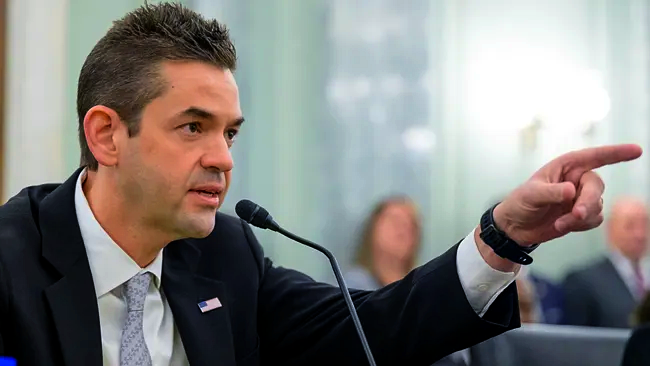
Why the Pullback of Jared Isaacman’s Nomination?
On May 28, Musk criticized a major administration bill currently being considered by the U.S. Congress, followed by the announcement on May 29 that he will be leaving the Trump administration on May 30. A sharper fallout continued and spilled over onto social media, leading, Isaacman said, to the withdrawal of his nomination.
- Administration changes
- All-In Podcast
- Bipartisan donations
- Committee vote
- Confirmation hearing
- Donald Trump
- Earth orbit missions
- Elon Musk
- Funding activities
- Human spaceflight
- Jared Isaacman
- Moderate politics
- NASA Administrator
- Nomination withdrawal
- Political dynamics
- Private astronaut
- Public comments
- Rationale for decision
- Senate confirmation
- Social media fallout
- SpaceX
- Support base
- Tech entrepreneur
- Visibility in politic
- White House
SpaceX Ax-4 launch postponed: propellant leak (Space News)
SpaceX’s Ax-4 mission, carrying four private astronauts to the International Space Station, has been postponed due to technical issues. The launch was initially delayed due to a LOx propellant leak in the Falcon 9 rocket and a new air pressure leak in the Russian segment.
- Ax-4 Mission
- Axiom Space
- Build & Flight Reliability
- Crew Dragon capsule
- Falcon 9 rocket
- Human spaceflight
- ISS (International Space Station)
- Launch delay
- Liquid oxygen
- Pacific Ocean
- Peggy Whitson
- Prelaunch tests
- propellant leak
- Refurbishment
- Rocket engines.
- RP-1
- Science experiments
- Shubhanshu Shukla
- Sławosz Uznański-Wiśniewski
- SpaceX
- Splashdown
- Static fire test
- Tibor Kapu
- Troubleshooting
- William Gestmeier
Astronauts Making Pizza on the ISS (Space People)
Pizza-making on the International Space Station (ISS) has become a unique culinary experience, with astronauts gathering to prepare and share their personal pizzas. The process involves securing ingredients, assembling the pizza, and baking it in a special oven. NASA is exploring 3D food printing technology for future missions.
- Ax-4 Mission
- Axiom Space
- Build & Flight Reliability
- Crew Dragon capsule
- Falcon 9 rocket
- Human spaceflight
- ISS (International Space Station)
- Launch delay
- Liquid oxygen
- Pacific Ocean
- Peggy Whitson
- Prelaunch tests
- propellant leak
- Refurbishment
- Rocket engines.
- RP-1
- Science experiments
- Shubhanshu Shukla
- Sławosz Uznański-Wiśniewski
- SpaceX
- Splashdown
- Static fire test
- Tibor Kapu
- Troubleshooting
- William Gestmeier